
While pupils are working, move around the room listening to what they are talking about and looking at the different representations they use.
Many pupils are now in their third school year of disrupted education and as a result they have all sorts of unexpected gaps in their learning. Faced by diverse needs, it’s easy to become overwhelmed and not know where to start.
So much has changed since the start of the pandemic, however some educational truths remain unchanged.
What pupils know dictates what they can learn
Dylan William, in his 2016 book Leadership for Teacher Learning, quotes American psychologist David Ausubel who says existing knowledge is “the most important single factor influencing learning.” Ascertain this, Ausubel says, and teach accordingly.
Likewise, Canadian psychologist Keith Stanovich, in his 1986 research paper Matthew Effects in Reading, says “Cumulative deficits increase over time. Those who start well continue to do so, those who do not find it hard to catch up.”
Both of these statements highlight the importance of timely assessment and effective interventions if pupils are to gain a secure and long-lasting understanding of mathematics.
Not only has it been widely recognised for many decades how important it is to build on what pupils already know, the gaps in pupil knowledge caused by learning through a pandemic have been recognised by both Ofsted and the DfE.
“We know that most children have learned less than usual over the past year,” Amanda Spielman, Ofsted’s chief inspector, said in a 2021 speech. “You need to teach them from where they are, not where you would have liked them to be.”
Take time to ensure learning is secure – identify then fill gaps
The DfE emphasised the importance of not trying to rush pupils through material to make up for lost learning. In its November 2021 report, Teaching a broad and balanced curriculum for education recovery, the department said:
“In the context of missed education, it remains crucial to take the time to practise, rather than moving through curriculum content too quickly. What pupils already know is key. Progressing to teaching new content when pupils are not secure with earlier content limits their chances of making good progress later. The sequence of teaching mathematical content is also very important: gaps need to be filled before new content is taught.”
Ofsted’s 2021 Education Inspection Framework makes multiple references to the need to, for example, “use assessment to check understanding and inform teaching” and to use curriculum planning flexibly “so that the school can address identified gaps in pupils’ mathematical knowledge that hinder their capacity to learn and apply new content.”
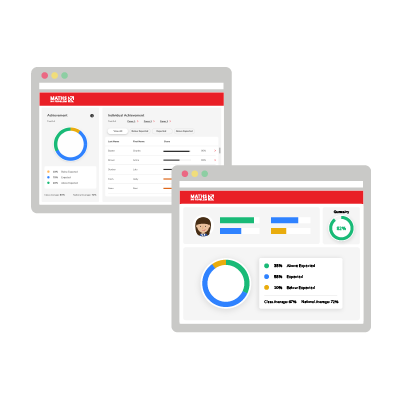
Baseline from Insights
See what pupils have retained. Quickly diagnose gaps. Move your class forward. Assessment as it was meant to be.
How do I find out what they know?
While it’s reassuring to know that there is widespread recognition of the need to establish what pupils know before teaching them the next steps, how can we establish prior learning before planning new sequences of lessons?
Waiting to carry out a cold task or pre-assessment in the first lesson of teaching a new topic is too late — it doesn’t give us enough time to adapt our planning in response to what we have found out.
The most effective assessment is carried out a couple of weeks before the start of a new topic so that we can plan to start the new lesson sequence by covering the essential prerequisites from previous years that our assessment has identified are missing, before moving on to the content for our current year group.
You can learn more about how to gather assessment evidence in another one of our blogs.
Low-stakes quizzes
The Review sections of the Maths — No Problem! workbooks are ideal for this. Asking pupils to complete the review questions from the previous year’s workbook for a particular topic (i.e. using the Year 2 fractions review before planning to teach Year 3 fractions) quickly shows you how much pupils remember.
The assessment questions in the DfE Primary Maths Guidance, linked to the Ready to Progress Criteria, are also ideal for this.
Editor’s Note:
Insights, the online assessment tool from Maths — No Problem! now comes with Baseline Assessment Papers, which can also provide an excellent measure of what pupils have retained from previous years.
Practical activities – classroom talk as an assessment tool
Alternatively, you might like to use formative assessment, carried out in small steps over a week or two. The anchor tasks from Maths — No Problem! textbooks are great to use for this purpose as they provide rich opportunities for classroom talk, which is an excellent assessment tool.
In her 2016 book, Assessment for Learning without Limits, Alison Peacock makes the point that the opportunity to formatively assess learning is “severely undermined” when dialogue is not abundant in our classrooms.
Again, working from the previous year’s textbook chapter on your new topic, select an anchor task. Ask pupils to work in pairs to see how many different ways they can tackle the ‘In Focus’ task. Don’t forget – three ways is a clever day!
While pupils are working, move around the room listening to what they are talking about and looking at the different representations they use. You will gather rich information about their recall of prior learning and their ability to apply it, which shows you what you need to cover at the start of your next teaching sequence.
Pitching the start of your teaching at the right level will save you time in the long run. More importantly, it ensures your pupils experience the high levels of success Barak Rosenshine says are necessary to boost their confidence.
They can and will succeed in maths!
Gill Knight
View ProfileBrowse By Topic
Your Teaching Practice
Boost your teaching confidence with the latest musings on pedagogy, classroom management, and teacher mental health.
View topic
→
Maths Mastery Stories
You’re part of a growing community. Get smart implementation advice and hear inspiring maths mastery stories from teachers just like you.
View topic
→
Teaching Tips
Learn practical maths teaching tips and strategies you can use in your classroom right away — from teachers who’ve been there.
View topic
→
Classroom Assessment
Identify where your learners are at and where to take them next with expert assessment advice from seasoned educators.
View topic
→
Your Learners
Help every learner succeed with strategies for managing behaviour, supporting mental health, and differentiating instruction for all attainment levels.
View topic
→
Teaching Maths for Mastery
Interested in Singapore maths, the CPA approach, bar modelling, or number bonds? Learn essential maths mastery theory and techniques here.
View topic
→
Deepen your mastery knowledge with our biweekly newsletter

By clicking “Accept All”, you agree to the storing of cookies on your device to enhance site navigation, analyze site usage and assist in our marketing efforts.