
The traditional 'drill and kill' method isn't just failing to produce results; it’s actively alienating a generation of learners from a subject vital to their future success.
For many students — and, truth be told, many adults — the word "math" is synonymous with "anxiety." Whether it’s the pressure of a timed test or the frustration of a formula that won't stick, math anxiety can be a significant barrier to learning. However, recent insights from educators and experts suggest that the right curriculum can transform this fear into confidence.
In Canada, where classrooms are increasingly diverse and the focus on mental health is a top priority, the Math — No Problem! mastery approach offers a refreshing solution. By moving away from rote memorization and towards a supportive, problem-solving model, we can help students let go of anxiety and find the "beauty" in mathematics.
The decline in Canada’s elementary math results
This shift toward a more supportive, mastery-based approach comes at a critical juncture for Canadian education. Recent data reveals a deepening "math crisis" across the country: in Ontario, 2024–2025 EQAO results show that nearly half of Grade 6 students (49%) failed to meet the provincial standard, with 48% of that cohort either dropping from the standard or never meeting it since Grade 3.
The situation is even more stark in Alberta, where 2024 Grade 6 Provincial Achievement Test (PAT) scores plummeted under a new curriculum, with nearly half of students failing to reach the "acceptable" level — even as the passing grade was lowered to just 37%. Perhaps most concerning is the emotional toll: only 48% of Ontario Grade 6 students now say they actually like math, while Alberta school boards report a steady decline in student interest. These figures suggest that the traditional "drill and kill" method isn't just failing to produce results; it’s actively alienating a generation of learners from a subject vital to their future success.
The root of the problem: Why math causes anxiety
Traditional math instruction often emphasizes speed, individual performance, and "right or wrong" answers. As Year 6 teacher Ross Deans notes, "Maths for me was an area of anxiety...it was something that repelled me as quite a creative person." Many students feel this same "sting" of performance pressure, which can lead to a cycle of avoidance.
Dr. Sue Gifford, an expert in early years education, points out that "research has proven that anxiety blocks working memory, which prevents learning." When a child is stressed, their brain literally lacks the capacity to process new information. This is particularly relevant in our post-pandemic landscape, where many learners are grappling with "depressed literacy, depressed number sense and depressed social skills."
Strategy 1: Framing math as a story
One of the most effective ways to lower the "affective filter" and reduce anxiety is through storytelling. The Maths — No Problem! curriculum frames math concepts as stories, which makes the subject more accessible and less intimidating.
"In every session, there's a story," says Ross Deans. By grounding abstract numbers in real-world contexts, students aren't just "grappling with formulas," they are solving problems for characters they recognize. This approach develops conceptual flexibility, giving children a "way in" to even the most complex problems.
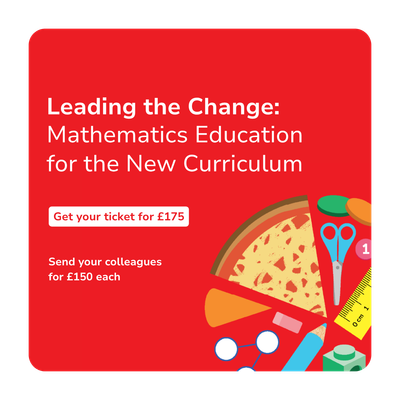
Community Event 2026
Join us on 14 October for a full day dedicated to transforming mathematics education!
With leading experts and classroom practitioners, we’ll explore the curriculum for 2028, share proven inclusion strategies and rediscover the joy of practical learning through pizza making.
Strategy 2: The power of oracy and collaboration
For many anxious learners, being "put on the spot" to provide a quick answer is the ultimate nightmare. The mastery approach replaces this with oracy — structured opportunities for children to talk about their math.
Suzi Telford, a math subject leader, has found that giving children the chance to articulate their thinking and challenge ideas collaboratively has a "profound impact on their self-esteem." When students work together, the focus shifts from the result to the process. As one student aptly put it: "I get new ideas from my friends because if I work by myself, I would just always have the same idea, and that's boring." This collaborative environment ensures that no child feels like an "invisible" learner, left to struggle in silence.
Strategy 3: Building a "robust toolkit" through CPA
Anxiety often stems from a lack of confidence. If a student only knows one way to solve a problem and that method fails, they panic. The Concrete-Pictorial-Abstract (CPA) approach, a pillar of the Maths — No Problem! program, ensures every child has a "robust toolkit" of strategies.
By starting with concrete manipulatives (like counters or blocks) and moving to pictorial representations (like bar models), students build a deep, intuitive grasp of mathematical relationships. "It's a very pictorial representation," Ross Deans explains, "something that's logical but also lends itself to being quite creative." This progression allows students to "visualize abstract ideas," making math feel less like a series of tricks and more like a logical puzzle they are equipped to solve.
Strategy 4: A mindset of "keep up, not catch up"
In the Canadian education, where inclusivity is a core value, the "keep up, not catch up" philosophy is particularly resonant. Emma Potter, Director of Mathematics at Leo Academy Trust, argues that we must stop classifying children into "ability" groups, which often acts as a self-fulfilling prophecy for those with low confidence.
The mastery approach assumes that every child has math potential. Instead of rushing through the curriculum to "cover" topics, teachers take the time to ensure every student understands the material. "If one hour isn't enough, they should take two hours," says Curriculum Lead Rabia Ahmed. This patient, deliberate pace removes the "fear of failure" and allows students to build the firm foundations necessary for long-term success.
Conclusion: Moving toward a confident future
Mastering math is, in many ways, like mastering driving. As Rosie Ross, an Assistant Headteacher, explains: "We can get in our car and we can do it without thinking...it’s about giving every child that sense."
By adopting a curriculum that prioritizes mental health, encourages collaboration and builds deep conceptual understanding, we can help Canadian students move past their anxiety. When we take the "sting" out of math and replace it with exploration and play, we aren't just creating better mathematicians — we are giving our children the confidence they need for a successful future.
Chris Fournier
View ProfileBrowse By Topic
Your Teaching Practice
Boost your teaching confidence with the latest musings on pedagogy, classroom management, and teacher mental health.
View topic
→
Maths Mastery Stories
You’re part of a growing community. Get smart implementation advice and hear inspiring maths mastery stories from teachers just like you.
View topic
→
Teaching Tips
Learn practical maths teaching tips and strategies you can use in your classroom right away — from teachers who’ve been there.
View topic
→
Classroom Assessment
Identify where your learners are at and where to take them next with expert assessment advice from seasoned educators.
View topic
→
Your Learners
Help every learner succeed with strategies for managing behaviour, supporting mental health, and differentiating instruction for all attainment levels.
View topic
→
Teaching Maths for Mastery
Interested in Singapore maths, the CPA approach, bar modelling, or number bonds? Learn essential maths mastery theory and techniques here.
View topic
→
Deepen your mastery knowledge with our biweekly newsletter

By clicking “Accept All”, you agree to the storing of cookies on your device to enhance site navigation, analyze site usage and assist in our marketing efforts.