
One of the outcomes of that is that pupils are less anxious and less scared of maths because they start to realise that it's okay to make mistakes.
– Andy Ash
In the landscape of Welsh education, the pursuit of equity is more than just a policy goal; it is about ensuring every child, regardless of their background, has access to the beauty and power of mathematics. A recent webinar hosted by Andy Ash explored this theme, delving into how schools can transition from a rigid, "one-dimensional" view of maths to a "multi-dimensional" approach that fosters deep, lasting understanding.
The session, which featured a guest appearance by Tom Best from Sandycroft School, North Wales, highlighted a transformative way of thinking that aligns perfectly with the Curriculum for Wales and its focus on progression and high expectations for all learners.
Moving beyond rules and sums
For many adults, memories of maths involve rote memorisation, endless drills, and the looming fear of being "wrong." Andy Ash describes this as a one-dimensional view. In this narrow perspective, maths is seen merely as a collection of rules and sums to be memorised. The result? Widespread maths anxiety and a societal belief that you are either a "maths person" or you aren't.
To achieve true equity, Ash argues we must shift toward a multi-dimensional view. As he noted during the session: “We spend a lot of time talking about how we should teach maths, but we often forget to reflect on what we actually mean when we say maths. Like what, what is maths?”
In a multi-dimensional classroom, maths is treated as a creative, interconnected language used to describe the world. It isn't just about getting the right answer; it’s about understanding the underlying structure of the problem. When students see maths this way, the fear of failure begins to evaporate. Ash explains: "One of the outcomes of that is that pupils are less anxious and less scared of maths because they start to realise that it's okay to make mistakes."
Strategies for the multi-dimensional classroom
Transitioning to this equitable model requires intentional teaching strategies that activate a child’s natural curiosity. The webinar outlined several core pillars:
1. Multiple representations
To understand the "why" behind the "how," pupils need to see mathematical concepts in different ways. This involves the use of concrete manipulatives (such as counters or tiles), pictorial diagrams, and abstract symbols. By moving between these representations, pupils can "see" the maths, making abstract concepts tangible and accessible.
2. The power of maths talk
Equity is built on the belief that every pupil has a voice. Ash emphasised the importance of fostering critical debate in the classroom. A simple but effective tactic discussed was the mandatory use of the word "because." Pupils are encouraged not just to give an answer, but to explain their reasoning. This shifts the focus from the result to the process, allowing teachers to assess a child's depth of understanding more accurately.
3. Activating metacognition
Metacognition—thinking about thinking—is a vital skill for independent learners. Ash suggests that teachers should model their own thought processes out loud. By hearing how an expert navigates a problem, including how they handle a mistake or a "dead end," pupils learn to monitor and regulate their own mathematical thinking.
High ceilings and low floors: A lesson from Sandycroft
A highlight of the webinar was the contribution of Tom Best, Maths and Numeracy Lead at Sandycroft School, who shared the school's decade-long journey with a mastery-based approach. Sandycroft utilises a "Low Floor, High Ceiling" philosophy. This means tasks are designed to be accessible to everyone (the low floor) while offering significant depth for those ready to be challenged (the high ceiling).
Tom highlighted the "What if?" technique as a way to push more advanced learners. Rather than giving faster pupils more of the same questions, teachers ask, "What if we changed this variable?" or "What if the total was different?" This encourages creative problem-solving rather than just speed.
Reflecting on the impact at Sandycroft, Tom said, "The biggest impact that we see is confidence... our children don't seem to have a fear of failure because of the nature of our lessons and our structure."
Alignment with the curriculum for Wales
The strategies discussed by Ash and Best are not just good practice; they are a direct reflection of the Curriculum for Wales. The new framework demands that pupils develop a "deep and connected" understanding of mathematics, moving away from siloed topics toward a more holistic application of knowledge.
The focus on Progression Steps ensures that learners are supported at their specific stage of development. By focusing on the "building blocks" of a concept—rather than just changing the numbers to make a sum "harder"—teachers ensure that differentiation is meaningful and inclusive.
How Maths — No Problem! supports the journey
Achieving this level of equity and depth can be a daunting task for busy educators. This is where Maths — No Problem! plays a crucial role. The programme is meticulously designed to support a multi-dimensional approach to mathematics.
Evidence-based resources: The textbooks and online tools are built on the principles of the Concrete-Pictorial-Abstract (CPA) approach, ensuring multiple representations are baked into every lesson.
Curriculum alignment: The resources are fully aligned with the Welsh curriculum and its progression steps, providing teachers with a clear roadmap to ensure high expectations are met for every pupil.
Teacher support: By providing structured lesson plans that prioritise "maths talk" and metacognition, the programme empowers teachers to move away from being the "source of all answers" to being facilitators of deep mathematical discovery.
Conclusion
As Andy Ash says, the crux of the matter is making the multi-dimensional view a reality in every classroom. When we stop viewing maths as a race to the finish line and start seeing it as a journey of exploration, we create an environment where every child can succeed. By embracing high-quality resources and fostering a culture of reasoning, Welsh schools can lead the way in creating a truly equitable mathematical future.
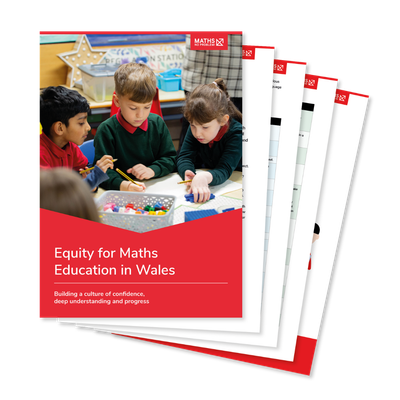
Download Spotlight Paper for Wales
Discover practical strategies you can begin implementing in your classroom to create a more inclusive environment that promotes deep problem-solving.
Browse By Topic
Your Teaching Practice
Boost your teaching confidence with the latest musings on pedagogy, classroom management, and teacher mental health.
View topic
→
Maths Mastery Stories
You’re part of a growing community. Get smart implementation advice and hear inspiring maths mastery stories from teachers just like you.
View topic
→
Teaching Tips
Learn practical maths teaching tips and strategies you can use in your classroom right away — from teachers who’ve been there.
View topic
→
Classroom Assessment
Identify where your learners are at and where to take them next with expert assessment advice from seasoned educators.
View topic
→
Your Learners
Help every learner succeed with strategies for managing behaviour, supporting mental health, and differentiating instruction for all attainment levels.
View topic
→
Teaching Maths for Mastery
Interested in Singapore maths, the CPA approach, bar modelling, or number bonds? Learn essential maths mastery theory and techniques here.
View topic
→
Deepen your mastery knowledge with our biweekly newsletter

By clicking “Accept All”, you agree to the storing of cookies on your device to enhance site navigation, analyze site usage and assist in our marketing efforts.