Cultivating Excellence in Qatar: A Global Standard for Mastery at Mesaieed International School

The learning behaviours of our pupils are exemplary. They understand the educational opportunity available to them, and they are not afraid to ‘have a go’ at complex problems.
– Lewis Hutchinson, Head of Primary
At Mesaieed International School (MIS) in Qatar, mathematics is more than a subject; it is a gateway to the future. Serving a diverse, multilingual community in a small industrial city south of Doha, the school has successfully implemented a mastery pedagogy that has redefined how students, teachers, and parents perceive mathematical success.
Through a committed partnership with Maths — No Problem! MIS has shifted the focus from rote calculation to deep conceptual understanding, resulting in attainment levels that sit significantly above the national average for England.
About Mesaieed International School
MIS is a unique not-for-profit "through-school" serving approximately 1,250 pupils from ages three to eighteen. Located in an industrial city, the school provides a premium international education to the families of employees working in the local power plants and heavy industries.
The school’s demographic is exceptionally diverse, representing nearly every continent. With 95% of pupils identified as Bilingual Multilingual Learners (BML), the school prioritises inclusive, visual, and language-rich instruction. As a four-form entry school from Year 3, MIS fosters a close-knit community where high expectations and a strong moral purpose drive students’ achievement.
The Journey to Mastery
5 years ago, with the appointment of now Deputy Head, Leanne Lowe, and the subsequent appointment of current Maths Lead, Will Matkin, the school began a deliberate transition toward a mastery approach. The goal was to move away from a traditional "quantity over quality" mindset and toward a curriculum that prioritised problem-solving and critical thinking.
The school now maintains high fidelity to the Maths — No Problem! scheme from Year 1 through Year 6, impacting around 550 pupils. This transition required a significant pedagogical shift, moving the focus of the lesson toward the Explore phase — the part of the lesson where students work in pairs or small groups with concrete materials to solve engaging, real-world problems — and the Guided Practice phases.
“Teachers were initially focused on the independent task as the main component. Now, they’ve embraced the power of the Explore task, allowing children to independently investigate concepts before coming together as a class,” says Will Matkin.
Impact: Confidence, Oracy, and High Attainment
The results of this shift have been transformative, both in data and in the classroom atmosphere.
- Exceptional Attainment: Student outcomes are significantly above English national averages, with a high proportion achieving "Greater Depth" in Insights* assessments. “The student achievement data we have is extraordinary which is undoubtedly influenced by the programme,” Lewis says.
- Reduced Maths Anxiety: A primary goal for the leadership team was to eliminate the fear of failure. Today, MIS students approach mathematics with confidence, viewing mistakes as a natural part of the learning journey. This process of overcoming anxiety applies to both teachers and students, says Lewis. “Our teaching staff have less maths anxiety than before. They are feeling more confident to ask the right questions, direct students in the right way, so it’s something we are combatting with the help of Maths — No Problem!”
- Remarkable Journalling: Students have developed the ability to articulate their thinking with clarity, often presenting multiple creative solutions to a single problem in their math journals. “In most classes, we introduce the Explore task briefly and the children start journalling independently,” says Lewis. “How they can represent their thinking is truly amazing and remarkable.”
A Regional Hub for Excellence
MIS’s influence extends beyond its own walls. As a not-for-profit institution, the school actively shares its expertise with the wider educational community in Qatar. MIS is now running a Teacher Research Group, which has branched into 2 strands depending upon where schools are in their development of a maths mastery curriculum. This means that MIS has become an unofficial hub for maths mastery in the region, leading at least two other international schools to adopt the Maths — No Problem! programme.
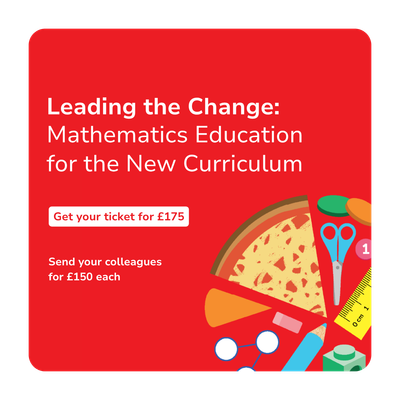
Community Event 2026
Join us on 14 October for a full day dedicated to transforming mathematics education!
With leading experts and classroom practitioners, we’ll explore the curriculum for 2028, share proven inclusion strategies and rediscover the joy of practical learning through pizza making.
Overcoming Challenges: Community and Subject Knowledge
Shifting the perceptions of a high-achieving parent body — many of whom value traditional rote learning — remains an ongoing mission. To bridge this gap, the school launched a "How It’s Done" video series to demonstrate mastery techniques to parents.
Simultaneously, the school has invested heavily in Teacher Subject Knowledge. Through professional development sessions and peer coaching, teachers have moved from being "resource-deliverers" to expert practitioners who are confident in directing students' enquiry and asking high-level questions.
Looking Ahead: The Polishing Stage
As MIS enters what Will Matkin calls the "polishing stage," the focus remains on deepening expertise and maintaining its status as a leader in mathematics education.
Future Objective | Implementation Strategy |
|---|---|
Advanced Subject Knowledge | Continued focus on expert-level pedagogical training for all primary staff. |
Research Integration | Keeping pace with global educational research to refine classroom practice. |
Network Leadership | Expanding the Qatar Maths Lead Network and Teacher Research Group to support other international schools. |
Resource Development | Working with partners to create more tangible resources for parent engagement. |
By fostering a culture where students "sound like real mathematicians," Mesaieed International School is ensuring that its students are not just prepared for exams, but for the complex STEM-based careers of tomorrow.
*Editor’s Note: Insights is the Maths — No Problem! assessment tool. To learn more, click here .
Learn more
Jeremy Hannay’s joyful revolution in primary maths
Mateu Ramonet on fostering a ‘talk rich’ maths classroom
Sarah Matthews on creating mathematicians and being top of the SATs tables
Browse By Topic
Your Teaching Practice
Boost your teaching confidence with the latest musings on pedagogy, classroom management, and teacher mental health.
View topic
→
Maths Mastery Stories
You’re part of a growing community. Get smart implementation advice and hear inspiring maths mastery stories from teachers just like you.
View topic
→
Teaching Tips
Learn practical maths teaching tips and strategies you can use in your classroom right away — from teachers who’ve been there.
View topic
→
Classroom Assessment
Identify where your learners are at and where to take them next with expert assessment advice from seasoned educators.
View topic
→
Your Learners
Help every learner succeed with strategies for managing behaviour, supporting mental health, and differentiating instruction for all attainment levels.
View topic
→
Teaching Maths for Mastery
Interested in Singapore maths, the CPA approach, bar modelling, or number bonds? Learn essential maths mastery theory and techniques here.
View topic
→
Deepen your mastery knowledge with our biweekly newsletter

By clicking “Accept All”, you agree to the storing of cookies on your device to enhance site navigation, analyze site usage and assist in our marketing efforts.