Cultivating a 'have-a-go' culture: How St Mary’s Newport transformed maths mindsets

The focus has shifted from just getting the right answers to developing a deep understanding of maths. Our students now have a ‘have-a-go’ mentality and take challenges in their stride.
– Donna Brend, Deputy Headteacher, St Mary’s School
When Donna Brend, Deputy Headteacher at St Mary’s School, looks at her classrooms today, she sees a radical shift in how students approach mathematics. Gone is the anxiety of needing to be "right" immediately; in its place is a vibrant culture of exploration, talk, and resilience.
By implementing Maths — No Problem! St Mary’s has moved away from a task-completion model toward one that prioritises the "why" behind the "how." The results have been validated at the highest level: following a full Estyn inspection in May 2023, the school received excellent feedback, with inspectors specifically praising the pupils' ability to think for themselves and the quality of classroom talk.
About St Mary’s, Newport
Located in the heart of Newport city centre, in South East Wales, St Mary’s is a diverse and multicultural Catholic primary school serving 400 pupils. The school manages a unique demographic blend, with students arriving from both the immediate urban centre and surrounding areas. While 9.3% of students receive Free School Meals, the school supports a significant number of children with Additional Learning Needs (ALN), requiring a curriculum that is both highly structured and inclusive.
Investing in Expertise
For St Mary’s, the transition to a mastery approach wasn't just about changing textbooks; it was about empowering the entire staff. The school has invested heavily in professional development, ensuring that teaching assistants — particularly in Reception and Key Stage 1 — are fully trained in the Maths — No Problem! approach.
To maintain high standards, the school uses:
- A Robust Support System: New staff members are paired with experienced practitioners through a "buddy system."
- Collaborative Planning: Teachers work together at the year-group level to anticipate misconceptions, spending just 10–15 minutes on prep because the core "backbone" of the lesson is already expertly designed.
- Expert Training: In Autumn 2025, the school hosted world-renowned expert Dr Yeap Ban Har for specialised journalling training, further deepening the staff’s pedagogical expertise.
Community Event 2026
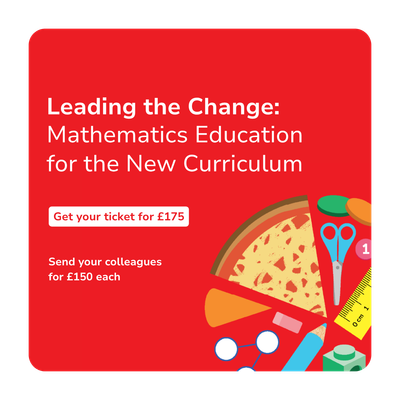
Join us on 14 October for a full day dedicated to transforming mathematics education!
With leading experts and classroom practitioners, we’ll explore the curriculum for 2028, share proven inclusion strategies and rediscover the joy of practical learning through pizza making.
Bridging the Gap Between School and Home
Recognising that the mastery approach differs significantly from how most parents learned maths, Donna Brend launched a series of six-to-eight-week workshops for Key Stage 2 parents. By explaining the "spiral progression" and providing access codes to the online platform, the school has secured high levels of parental engagement and buy-in.
“We welcome parents at the start of every year to share how we teach,” says Donna. “It’s about embedding the approach so that the support the children get at home aligns with what they do in the classroom.”
A Seamless Fit for the Welsh Curriculum
A primary driver of St Mary’s success is how naturally the mastery approach aligns with the Curriculum for Wales. Donna Brend notes that the programme "hits everything we need it to hit," particularly the emphasis on problem-solving and collaboration. The school found that the Foundations programme for Reception was a game-changer, creating a "seamless transition" into Year 1. Previously, the transition felt disjointed, but with a consistent progressive framework from the very start, teachers now have a clear sequential roadmap of what to teach and when.
This alignment extends to the classroom environment, which Donna describes as "crackling to life" during exploration tasks. Students are no longer passive recipients of information; they are active participants. The Estyn inspectors specifically highlighted this, noting that pupils consistently apply their numeracy skills in authentic learning experiences. For example:
- Year 4: Students confidently convert fractions to decimals and construct accurate bar charts based on real-world data like the world’s tallest buildings.
- Year 6: Pupils apply volume and area calculations to practical designs, such as creating Anderson shelters or determining how many boxes fit into a removal van.
Empowering Teachers and Optimising Prep
One of the most significant benefits for the staff at St Mary’s is the reduction in administrative burden. Because the "backbone" of every lesson is expertly designed within the Maths — No Problem! framework, teachers have seen a dramatic shift in their workload.
“Planning time has shifted from creation to tailoring,” says Donna. “It now takes just 10–15 minutes of prep because the core of the lesson is already there. This allows our teachers to focus on anticipating misconceptions rather than building slides from scratch.”
The introduction of the Interactive Presentation tool has further streamlined this process. It integrates concrete manipulatives directly onto the screen, meaning teachers no longer need to hunt for magnetic resources or external websites. This support is particularly vital for teachers who may not consider themselves "maths experts," as the programme provides the depth and structure necessary to deliver high-quality mastery lessons with total confidence.
Measurable Success and High Attainment
The cultural shift at St Mary’s is backed by hard data. The school has seen a marked increase in attainment in the mandatory Welsh Personalised Assessments, particularly among average to more-able learners. Donna attributes this directly to the "daily diet" of the mastery approach.
Crucially, the programme has fostered a healthy relationship with failure. Even the most able learners have become comfortable with the idea of not getting every answer right the first time. By showing the "journey" of a calculation rather than just the result, St Mary’s is cultivating a generation of resilient, independent thinkers who are as comfortable explaining their methods to an inspector as they are to talk to their partners.
Live Assessment and Deep Impact
The move to Maths — No Problem! has allowed teachers to shift their focus from administrative preparation to "live" teaching. By using the programme's Interactive Presentation tools, teachers are free to circulate, conduct live marking, and identify immediately which children need a further push or additional support.
This strategic approach is mirrored in Donna’s own leadership. By teaching a Year 5 class herself, she has gained a deeper appreciation for the programme’s purpose-built structure.
“There is a strong belief here that Maths — No Problem! is underpinned by theory that works,” Donna explains. “The scaffolding and progression give our teachers the confidence to step back and let the children take the lead.”
A Future of Independent Thinkers
The impact on pupil mindset has been the most rewarding outcome. The 2023 Estyn report contained no recommendations for maths — a testament to the school's successful implementation. Pupils are now comfortable working with partners, explaining their methods, and, crucially, understanding that it is acceptable not to finish every task if the time is spent gaining a deeper understanding.
As St Mary’s continues to refine its practice — including testing new digital features and enhancing the use of manipulatives — the goal remains clear: to ensure every child at St Mary’s, regardless of their background or learning needs, views themselves as a capable, confident mathematician.
Browse By Topic
Your Teaching Practice
Boost your teaching confidence with the latest musings on pedagogy, classroom management, and teacher mental health.
View topic
→
Maths Mastery Stories
You’re part of a growing community. Get smart implementation advice and hear inspiring maths mastery stories from teachers just like you.
View topic
→
Teaching Tips
Learn practical maths teaching tips and strategies you can use in your classroom right away — from teachers who’ve been there.
View topic
→
Classroom Assessment
Identify where your learners are at and where to take them next with expert assessment advice from seasoned educators.
View topic
→
Your Learners
Help every learner succeed with strategies for managing behaviour, supporting mental health, and differentiating instruction for all attainment levels.
View topic
→
Teaching Maths for Mastery
Interested in Singapore maths, the CPA approach, bar modelling, or number bonds? Learn essential maths mastery theory and techniques here.
View topic
→
Deepen your mastery knowledge with our biweekly newsletter

By clicking “Accept All”, you agree to the storing of cookies on your device to enhance site navigation, analyze site usage and assist in our marketing efforts.